Perseid Meteor Shower 2026: When, Where, and How to Watch This Stunning August Sky Show

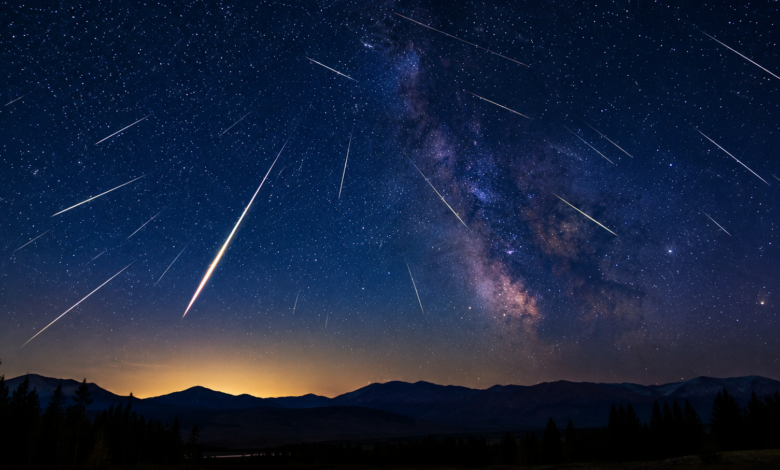
The Perseid meteor shower is returning to the summer sky, giving stargazers one of the most anticipated celestial displays of the year. In 2026, the shower reaches its maximum around August 13, and viewing conditions are expected to be particularly favorable because the Moon will not significantly interfere with the darkness of the sky.


For anyone who enjoys looking at the night sky, the Perseids offer an excellent opportunity to see bright meteors without sophisticated equipment. A comfortable place to lie back, a clear sky, and patience are usually enough to enjoy the spectacle.
When Will the Perseid Meteor Shower Peak?
The Perseid meteor shower is active from July into August, but its activity becomes much stronger around its peak. NASA identifies the Perseids as one of the most popular annual meteor showers, with the peak traditionally occurring around August 12 or 13.
For 2026, NASA’s meteor activity forecast places the maximum at approximately August 13 at 14:09 UTC, with a predicted zenithal hourly rate of about 92 meteors under ideal conditions.
That does not mean every observer will see 92 meteors every hour. The theoretical rate assumes excellent conditions, including a dark sky and the radiant positioned high overhead. City lights, clouds, haze, trees, buildings, and the observer’s location can significantly reduce the number of visible meteors.
The strongest viewing generally occurs during the hours after midnight and before dawn, when the part of Earth beneath the meteor stream is moving into the debris field and the Perseid radiant is higher in the sky. NASA also recommends pre-dawn viewing for observers in the Northern Hemisphere.
What Causes the Perseids?
The beauty of the Perseids comes from something surprisingly small: dust and rocky particles left behind by Comet 109P/Swift-Tuttle.
As the comet travels around the Sun, it releases material along its orbital path. Earth crosses this stream of debris every year. Tiny particles then enter Earth’s atmosphere at extremely high speeds, heat up through atmospheric interaction, and produce the bright streaks commonly called shooting stars.
Most of these particles are remarkably small, often comparable to grains of sand or small pieces of gravel. They generally burn up high above the ground rather than reaching Earth’s surface. In other words, the spectacular flash seen from the ground is usually the final moment of a tiny piece of ancient cometary material.
Comet Swift-Tuttle itself is much larger. NASA describes its nucleus as roughly 26 kilometers across and notes that it returns through the inner solar system on a long orbital cycle.
Why Are They Called Perseids?
The name comes from the constellation Perseus. If you trace the paths of many Perseid meteors backward across the sky, they appear to originate from a particular region near Perseus. This apparent starting point is called the radiant.
The meteors are not actually traveling outward from Perseus. Perspective creates the impression that their paths converge there, much like railway tracks appear to meet in the distance even though they remain parallel.
This effect is common among meteor showers. Astronomers often name showers after the constellation or star near their radiant, which is why the August display became known as the Perseids.
Where Should You Watch?
The best location for watching the Perseid meteor shower is somewhere with a wide, unobstructed view of the sky and as little artificial light as possible.
A rural field, open countryside, mountain area, beach away from developed areas, or designated dark-sky location can provide a much better experience than a brightly illuminated city. Light pollution makes faint meteors difficult or impossible to see.
You do not need to stare directly at Perseus. Meteors can appear across a large portion of the sky. In fact, looking at an area somewhat away from the radiant can make longer meteor trails easier to notice.
Give your eyes time to adjust to darkness. Constantly checking a bright phone screen can reduce night vision, so it is better to keep screens dim or avoid them whenever possible.
Do You Need a Telescope?
No. One of the biggest advantages of meteor showers is that they are among the easiest astronomical events to observe.
A telescope actually limits the amount of sky you can see, while meteors may flash anywhere across your field of view. Binoculars are also unnecessary for the main display.
Instead, a reclining chair, blanket, sleeping bag, or comfortable ground mat can make a long observing session much more enjoyable. Dress appropriately for the nighttime temperature, even during summer, and allow yourself plenty of time.
Patience matters because meteor showers do not produce a perfectly continuous stream of meteors. You may see several quickly and then wait several minutes before another bright streak appears.
What Makes the Perseids Special?
The Perseids have earned their reputation because they can produce numerous bright and fast meteors. NASA notes that the shower is also particularly well known for fireballs, which are exceptionally bright meteors created by larger particles entering the atmosphere.
A fireball can be much more dramatic than an ordinary meteor. It may remain visible longer, appear unusually bright, or display noticeable color as it crosses the sky.
Another advantage is timing. Unlike some major meteor showers that peak during colder months, the Perseids arrive during August. For many observers, warm summer nights make it easier to spend several hours outside watching the sky.
What to Expect in 2026
The 2026 Perseid meteor shower is especially interesting because observing events scheduled for August 12–13 note a dark, moonless or nearly moonless sky around the peak. A darker sky means more faint meteors can potentially be detected.
NASA’s official 2026 forecast estimates a maximum zenithal hourly rate near 92. This is an idealized figure rather than a promise of what an individual observer will see.
Weather will ultimately play a major role. Even a theoretically excellent meteor shower can disappear behind clouds. Local conditions, humidity, haze, and light pollution should therefore be considered before choosing an observing location.
Simple Tips for Better Viewing
Choose the darkest safe location available and arrive before the main viewing period so your eyes can adjust naturally. Lie back rather than standing and looking upward for long periods, because a reclining position makes extended observation considerably more comfortable.
Avoid unnecessary white light. If you need a flashlight, a dim red light is generally less disruptive to dark adaptation.
Do not expect every meteor to look like a giant fireball. Many will be faint and quick, while others may leave long, noticeable trails. The experience becomes much more rewarding when you watch patiently instead of expecting constant action.
If you want to photograph the shower, use a stable camera or tripod, a wide-angle lens, and a long exposure. Meteor photography often requires experimentation because you cannot predict exactly where the next bright meteor will appear.
Frequently Asked Questions
What is the Perseid meteor shower?
The Perseids are an annual meteor shower created when Earth passes through debris left along the orbit of Comet 109P/Swift-Tuttle. The particles enter Earth’s atmosphere at high speed and produce visible streaks of light.
When is the 2026 peak?
NASA’s 2026 forecast places the maximum around August 13 at 14:09 UTC. Local observing conditions can make the night of August 12–13 especially important for many Northern Hemisphere observers.
Can I see the Perseids without equipment?
Yes. The meteors are visible to the unaided eye, and a telescope is not necessary. A dark location and clear sky are much more important than expensive equipment.
How many meteors can I see?
The predicted peak rate for 2026 is about 92 meteors per hour under ideal conditions, but actual numbers vary substantially depending on sky brightness, weather, location, and how high the radiant is in the sky.
Is the Perseid shower dangerous?
No. The tiny particles responsible for most meteors burn up high in Earth’s atmosphere. Watching the shower from the ground is a normal and safe astronomical activity.
Final Thoughts
The Perseid meteor shower remains one of the easiest and most rewarding celestial events to enjoy without specialized equipment. Its connection to Comet Swift-Tuttle, fast-moving meteors, occasional fireballs, and comfortable August viewing conditions make it a favorite among both experienced astronomers and casual sky watchers.
For 2026, the timing is particularly promising, with the predicted maximum falling around August 13 and a relatively dark lunar backdrop.
Find a safe location away from bright city lights, give your eyes time to adjust, switch off unnecessary screens, and simply look up. You may see only a handful of meteors, or you may be fortunate enough to watch several bright streaks cross the sky. Either way, the experience offers a direct connection to material that has traveled through space for generations before briefly illuminating Earth’s atmosphere.