Emergency Alert Test: What the Public Should Know About Nationwide Emergency Notifications

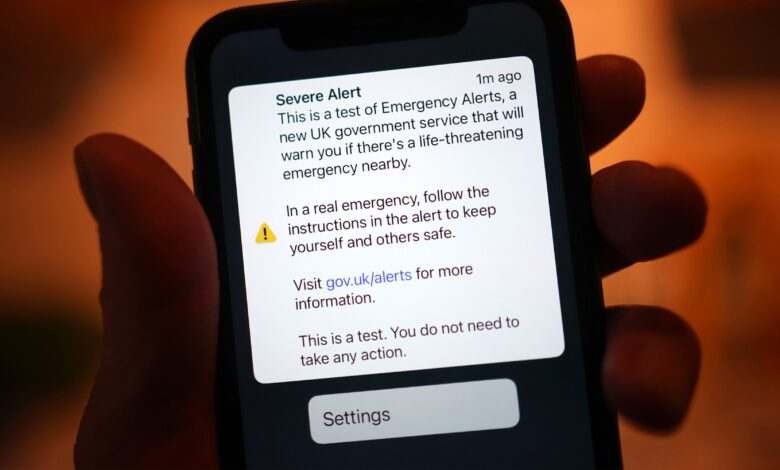
An emergency alert test can be startling when a loud tone suddenly comes from a mobile phone, television, or radio. Although the message may look and sound like a real warning, a test is designed to check whether emergency communication systems can successfully reach people when a genuine disaster occurs. In the United States, these tests are closely associated with the Federal Emergency Management Agency (FEMA), the Federal Communications Commission (FCC), the Emergency Alert System (EAS), and Wireless Emergency Alerts (WEA).


Emergency notification systems are an important part of modern public safety. They can deliver information about dangerous weather, missing children, public safety threats, and other urgent situations. Testing these systems helps officials identify technical problems before an actual emergency puts lives at risk. FEMA says testing, training, and exercising are important parts of maintaining effective public alerting capabilities.
What Is an Emergency Alert Test?
An emergency alert test is a controlled message sent through one or more public warning systems to determine whether the technology and communication network are working as intended. The purpose is not to warn people about an immediate threat but to evaluate the ability to distribute an alert quickly and reliably.
In the United States, the national public alert infrastructure includes systems such as EAS and WEA. These systems operate through different communication channels, allowing authorities to reach people through compatible mobile phones, television stations, radio stations, cable systems, satellite services, and other participating platforms. FEMA’s Integrated Public Alert and Warning System, commonly known as IPAWS, helps connect authorized alerting authorities with these dissemination systems.
A test can therefore involve much more than a message appearing on someone’s phone. Behind the scenes, officials and communications providers are checking whether an alert can move through multiple stages and ultimately reach the intended audience.
Why Emergency Alerts Need Regular Testing
The value of an alert system becomes clear during a crisis. If a tornado is approaching, a wildfire is spreading, or another dangerous event develops rapidly, people may have only minutes to react. An emergency message needs to reach the public quickly, clearly, and reliably.
Testing helps reveal weaknesses that might otherwise remain unnoticed. A national test conducted in October 2023, for example, examined both WEA and EAS. The FCC later reported that most participating respondents successfully received the wireless test, while the EAS portion showed that the large majority of participating broadcast and distribution systems successfully received and retransmitted the message. The test also identified areas where delivery, audio, and vibration experiences could be improved.
That kind of evaluation matters because a communication system can appear to work normally during everyday use while still encountering problems under the unusual conditions of a major emergency.
How Wireless Emergency Alerts Work
Wireless Emergency Alerts are short emergency messages delivered to compatible mobile devices through participating wireless networks. Unlike ordinary text messages, WEA messages are designed specifically for public safety notifications and can use distinctive sounds and vibration patterns to attract attention.
During a national test, participating wireless providers transmit the test through their networks. FEMA’s information about national testing explains that compatible phones generally need to be switched on, within range of an active cell tower, and connected to a network supporting WEA in order to receive the message. A provider’s participation and network coverage can also affect whether a particular device receives a test.
This is why two people standing in the same location may occasionally have different experiences. Phone compatibility, network conditions, settings, carrier participation, and other technical factors can influence delivery.
What Happens During a National Test
A nationwide emergency alert test is carefully coordinated rather than simply being a message sent without preparation. FEMA and the FCC work with wireless providers, broadcasters, emergency managers, and other participants to evaluate the public warning infrastructure.
During the 2023 national test, the WEA component was transmitted through participating wireless networks, while the EAS component reached radio and television systems. The test message specifically identified itself as a test and told the public that no action was necessary.
The distinction between testing and an actual emergency is important. A legitimate test should clearly communicate that people do not need to evacuate, shelter, seek medical assistance, or take another emergency action merely because the test notification appears.
Why Some People May Not Receive a Test
Not receiving an emergency alert test does not automatically mean that someone’s phone is defective. There are several possible explanations.
A mobile device may not be compatible with a particular alert technology, or it may not be connected to a participating wireless network. Poor cellular coverage can also interfere with delivery. During previous national tests, authorities acknowledged that provider participation and network availability could affect reception.
There can also be differences between test types. Some tests are nationwide, while others are conducted by state, county, city, emergency management agencies, or individual broadcasters. A local test may therefore appear on one person’s device or television while another person outside the targeted area sees nothing.
Emergency Alerts Are Not the Same as Ordinary Texts
One reason emergency notifications can feel unusual is that they are technically different from everyday messages. A WEA notification is designed to command attention because its purpose is public safety.
The alert may produce a distinctive sound or vibration, depending on the device and type of notification. This design is intentional. In an actual emergency, people may not be actively looking at their phones, so the system needs a way to attract attention quickly.
FEMA’s national test information notes that test messages can include tones and vibration, while language settings can affect how the message is displayed.
What You Should Do When You See a Test
When a message clearly identifies itself as an emergency alert test, there is normally nothing the public needs to do. The purpose is to allow authorities and communication providers to evaluate the system.
However, people should pay close attention to the wording. A real emergency notification can contain instructions that require immediate action. A test should be clearly identified as such, while an authentic warning may provide information about the threat, affected area, and recommended response.
It is also wise not to assume every alarming message on a phone is automatically genuine. During a real emergency, people should rely on official emergency communications and established public safety authorities rather than unverified social media posts or forwarded messages.
The Importance of Accessibility
Emergency communication must reach as many people as possible, including individuals with disabilities. Accessibility is therefore an important part of testing public warning systems.
The FCC’s review of the 2023 nationwide test included attention to accessibility and noted efforts to better understand how people with disabilities received and experienced the wireless notification.
Effective warning systems should communicate essential information in ways that people can perceive and understand. Testing provides an opportunity to identify barriers and improve the experience before an actual emergency occurs.
Will There Always Be a Nationwide Test Every Year?
No. A nationwide test is not necessarily an annual event. Federal law requires FEMA to conduct nationwide tests of the Integrated Public Alert and Warning System at least once every three years, although the exact timing and scope of testing can vary. The 2023 national test included both WEA and EAS.
This distinction is useful because online posts sometimes describe an upcoming alert as though every emergency notification is part of a scheduled national event. In reality, emergency alerting also occurs at state and local levels, and individual jurisdictions may conduct their own exercises.
Frequently Asked Questions
Is an emergency alert test a real emergency?
No. When the notification clearly states that it is a test, it is intended to evaluate the alerting system rather than warn the public about an immediate danger. No emergency action is normally required for a clearly identified test.
Why did my phone make a loud noise?
Emergency alerts are designed to attract attention. Wireless test messages can use special tones and vibration so officials can evaluate how the notification reaches people and whether it is noticeable.
What if I did not receive the test?
Several factors can affect delivery, including phone compatibility, cellular coverage, network participation, and the type of test being conducted. Not receiving one notification does not necessarily indicate a problem with the device.
Are emergency alerts only sent to phones?
No. Public warning infrastructure can reach people through multiple channels. The EAS can distribute alerts through television and radio, while WEA is designed for compatible wireless devices. FEMA’s IPAWS infrastructure connects authorized alerting authorities with several public dissemination pathways.
Conclusion
An emergency alert test may seem like a minor interruption, but it serves an important public safety purpose. Every successful notification helps demonstrate whether the systems responsible for delivering urgent information can function when people need them most.
The experience of previous nationwide tests has shown that these systems are broadly effective while also revealing opportunities for improvement. FEMA and the FCC continue to rely on testing, technical evaluation, and feedback to strengthen public warning capabilities.
For the public, the most important lesson is simple: understand the difference between a test and a genuine warning, pay attention to official instructions during real emergencies, and recognize that the occasional test message is part of maintaining a communication system designed to protect communities when seconds can matter.