Ana de Armas as Marilyn Monroe: The Story Behind Her Powerful Transformation in Blonde

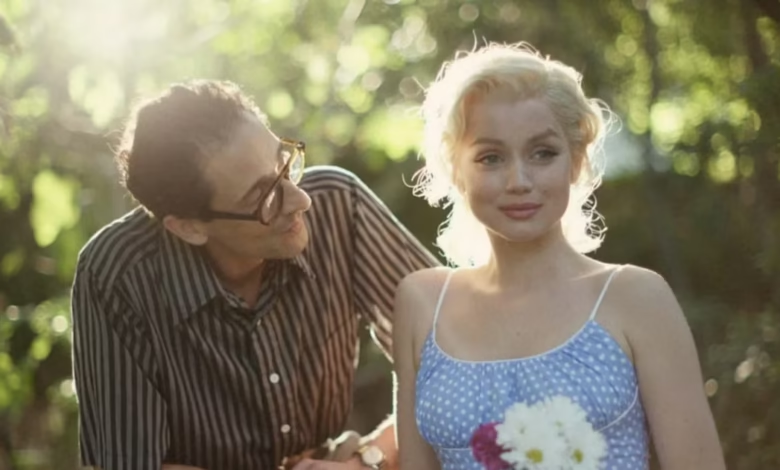
Ana de Armas as Marilyn Monroe became one of the most talked-about celebrity transformations when the actress portrayed the legendary Hollywood star in the 2022 psychological drama Blonde. Known for her performances in films such as Knives Out and No Time to Die, de Armas took on the challenging task of bringing one of the most recognizable women in entertainment history to the screen. Her performance attracted widespread attention because of her physical transformation, emotional intensity, and commitment to portraying Monroe’s complicated life.


Marilyn Monroe remains an enduring cultural icon decades after her death. Her beauty, screen presence, and public image made her a Hollywood legend, but her personal struggles and desire to be taken seriously as an actress also shaped her story. Through Blonde, audiences were invited to look beyond the glamorous image and consider the emotional challenges that may have existed behind it.
Who Is Ana de Armas?
Ana de Armas is a Cuban-born actress who developed an international career through her work in Spanish-language and English-language films. Born on April 30, 1988, in Havana, Cuba, she began acting at a young age and later moved to Spain to pursue greater opportunities in the entertainment industry.
Her early career included appearances in Spanish productions, particularly the television series El Internado. After moving to Hollywood, she gradually established herself as a versatile performer capable of working across different genres.
Her breakthrough for many international audiences came with the 2019 mystery film Knives Out, in which she played Marta Cabrera. Her performance earned critical praise and helped introduce her to a wider audience.
She subsequently appeared in major productions, including No Time to Die and The Gray Man. These roles demonstrated her ability to handle action, drama, and emotionally demanding characters.
Playing Marilyn Monroe represented a different kind of challenge. Instead of portraying a fictional character, de Armas had to interpret the life of a real person whose image and legacy remain deeply familiar to audiences around the world.
Why Did Ana de Armas Play Marilyn Monroe?
The decision to cast Ana de Armas as Marilyn Monroe was based on her ability to convey emotion and vulnerability, rather than simply resemble the famous actress.
Director Andrew Dominik wanted to create a film that explored Monroe’s experiences through an intimate and often unsettling perspective. The project was based on Joyce Carol Oates’s 2000 novel Blonde, a fictionalized interpretation of Monroe’s life rather than a straightforward historical biography.
This distinction is important because the film combines recognizable elements of Monroe’s public life with imagined scenes and psychological interpretations.
De Armas’s casting attracted considerable discussion when it was announced. Some viewers questioned whether an actress with a Cuban background could convincingly portray an American icon known for her distinctive voice and mannerisms.
However, the production team focused on developing a performance that captured Monroe’s emotional complexity. De Armas worked extensively on her voice, movement, expressions, and screen presence to create a recognizable interpretation of the Hollywood legend.
Her performance ultimately became one of the film’s central talking points.
Ana de Armas’s Transformation Into Marilyn Monroe
The transformation required considerably more than blonde hair, makeup, and period costumes. De Armas needed to reproduce aspects of Monroe’s public appearance while developing an emotional understanding of the character she was portraying.
Her Physical Appearance
Marilyn Monroe’s platinum-blonde hair, carefully styled curls, expressive eyes, and glamorous wardrobe formed an essential part of her public identity.
For Blonde, the costume, makeup, and hairstyling teams recreated several looks associated with Monroe. The film features visual references to famous photographs and moments from her career, allowing audiences to recognize the inspiration behind particular scenes.
However, the goal was not simply to reproduce iconic images. The filmmakers also used lighting, framing, and costume design to explore the difference between Monroe’s public persona and her private experiences.
De Armas’s appearance helped establish that contrast. In glamorous scenes, she evokes the image familiar from classic Hollywood photographs. In more intimate moments, the performance shifts toward vulnerability and emotional exhaustion.
Her Voice and Mannerisms
One of the most discussed aspects of Ana de Armas as Marilyn Monroe was her voice.
Monroe had a distinctive speaking style that contributed to her screen identity. Her breathy delivery, carefully controlled expressions, and particular rhythm of speech were recognizable features of many performances.
De Armas spent months preparing for the role and worked with a dialect coach to develop her interpretation of Monroe’s voice. The process was especially demanding because she was not a native English speaker.
Some viewers initially questioned the accent, while others praised the effort involved in reproducing Monroe’s speech patterns.
The finished performance reflects an actor’s interpretation rather than a perfect imitation. De Armas attempts to capture the mannerisms that made Monroe recognizable while giving the character an emotional presence of her own.
What Is the Movie Blonde About?
Released in 2022 and directed by Andrew Dominik, Blonde examines a fictionalized version of Marilyn Monroe’s life, from her difficult childhood to her rise as one of Hollywood’s biggest stars.
The film explores themes of fame, identity, exploitation, loneliness, and the pressure placed on women in the entertainment industry.
Rather than following a conventional chronological biography, the story moves through emotionally charged episodes. It frequently shifts between Monroe’s public success and the private suffering imagined by the filmmakers.
This approach makes Blonde different from a traditional biographical film. It is less concerned with documenting every major event accurately than with creating a subjective portrait inspired by Monroe’s life and the novel on which it is based.
That artistic choice also explains why the film generated controversy. Some viewers appreciated its willingness to explore painful subjects, while others criticized its graphic content and portrayal of Monroe’s suffering.
It is therefore important to distinguish the film’s dramatic interpretation from established historical facts about the actress.
How Accurate Was Ana de Armas’s Portrayal?
The accuracy of Ana de Armas as Marilyn Monroe depends on which aspects of the performance are being considered.
Her physical transformation and attention to Monroe’s public mannerisms were intended to evoke the real actress. The film also draws on recognizable elements of Monroe’s career, including her Hollywood fame, marriages, and experiences in the studio system.
However, Blonde is not a documentary, and its source material is a work of fiction.
Some scenes are dramatized, altered, or imagined. Consequently, viewers should not assume that every conversation, personal encounter, or disturbing incident depicted in the film happened exactly as shown.
The movie’s emotional portrait is shaped by its director’s artistic decisions and the novel’s interpretation of Monroe’s life.
De Armas’s achievement should therefore be evaluated as an acting performance within a fictionalized production, rather than as a definitive account of Monroe’s personal history.
This distinction allows audiences to appreciate the craft involved while remaining thoughtful about how real people are represented on screen.
Critical Reception and Awards Recognition
Blonde received mixed reviews when it premiered, with critics expressing different opinions about its approach to Monroe’s life.
Ana de Armas’s performance was frequently singled out for attention, even by reviewers who found the film’s overall treatment of its subject troubling or excessively bleak.
Her work demonstrated a willingness to take on an emotionally demanding role that required sustained physical and psychological preparation.
In 2023, de Armas received an Academy Award nomination for Best Actress for her performance in Blonde. The nomination marked an important milestone in her career and placed her interpretation of Monroe among the year’s most recognized leading performances.
The recognition also reflected the scale of the challenge. Portraying a famous real person often invites intense scrutiny because viewers already have expectations about the subject’s appearance, voice, and personality.
De Armas faced those expectations while attempting to communicate a complex emotional story.
Although opinions about the film remain divided, her performance established Blonde as a significant project in her career.
Why Marilyn Monroe Still Fascinates Audiences
Marilyn Monroe’s influence extends far beyond the films she made during Hollywood’s Golden Age. Her image continues to appear in fashion, photography, advertising, popular culture, and discussions about celebrity.
She became famous for performances in films such as Some Like It Hot, The Seven Year Itch, and Gentlemen Prefer Blondes. Her comic timing, screen presence, and distinctive personality helped make her one of the most recognizable stars of her generation.
Yet Monroe also sought greater artistic respect and more control over her career. She studied acting and worked to establish herself as a serious performer, challenging the limitations often imposed on glamorous female stars.
Her life continues to attract attention partly because of the contrast between her public image and the difficulties she experienced privately.
The continuing interest in her story creates both opportunities and responsibilities for modern filmmakers. Each new portrayal can introduce Monroe to another generation, but it can also shape how audiences understand a person who can no longer speak for herself.
Ana de Armas and Marilyn Monroe’s Lasting Legacy
The connection between Ana de Armas and Marilyn Monroe illustrates how challenging it can be to portray a cultural icon.
De Armas brought her own acting experience to a role shaped by decades of public fascination. Her performance combined recognizable visual references with an interpretation of Monroe’s emotional world.
The film also encouraged renewed conversations about celebrity culture, the treatment of women in Hollywood, and the difference between a public image and a private identity.
Although Blonde received mixed reactions, it ensured that Monroe’s story remained part of contemporary entertainment discussions.
For de Armas, the role represented a major professional achievement and demonstrated her willingness to move beyond familiar genres into demanding dramatic territory.
Ultimately, her portrayal is one interpretation of a much larger legacy. Monroe’s life, career, and cultural influence cannot be fully captured by a single film, regardless of the commitment of the actor playing her.
Frequently Asked Questions
Did Ana de Armas play Marilyn Monroe?
Yes. Ana de Armas portrayed Marilyn Monroe in the 2022 film Blonde, directed by Andrew Dominik. The movie presents a fictionalized interpretation of Monroe’s life.
Did Ana de Armas win an Oscar for Blonde?
No. She received an Academy Award nomination for Best Actress in 2023 but did not win the award.
How long did Ana de Armas prepare for the role?
De Armas spent months preparing for the performance, including working on Monroe’s voice, mannerisms, and physical presentation. Her preparation was particularly important because of the attention audiences would give to the portrayal of such a recognizable figure.
Is Blonde based on a true story?
Blonde is based on Joyce Carol Oates’s novel of the same name. Although it draws inspiration from Marilyn Monroe’s life, it is a fictionalized work and should not be treated as a fully accurate biography.
Why did Ana de Armas receive attention for the role?
Her performance attracted attention because she transformed her appearance, worked extensively on Monroe’s voice, and took on an emotionally demanding role. The film’s controversial approach to Monroe’s story also generated considerable discussion.
Conclusion
Ana de Armas as Marilyn Monroe remains a memorable example of an actress taking on one of Hollywood’s most recognizable figures. Through extensive preparation, detailed characterization, and an emotionally intense performance, de Armas attempted to look beyond Monroe’s glamorous public image and explore the vulnerabilities suggested by the film’s interpretation.
Although Blonde divided audiences and included fictionalized events, de Armas’s performance earned major awards recognition, including an Academy Award nomination. Her portrayal also renewed discussions about Monroe’s career, the pressures of fame, and the responsibilities involved in telling the stories of real people.
More than simply recreating a famous face, de Armas approached the role as a demanding dramatic challenge. The result remains a significant moment in her career and another chapter in the enduring public fascination with Marilyn Monroe.