Audrey Hepburn and Bill Gates: The Untold Story Behind Two Icons of Humanity and Philanthropy

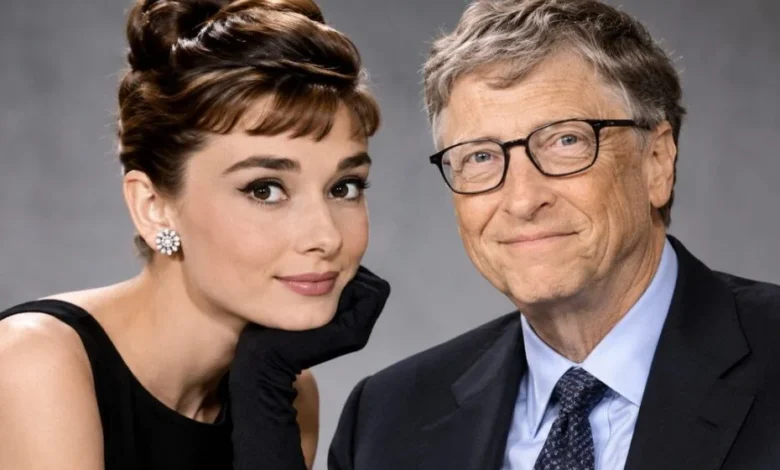
Audrey Hepburn and Bill Gates are two internationally recognized names who made remarkable contributions in very different fields. Hepburn became one of Hollywood’s most beloved actresses before dedicating much of her later life to humanitarian work. Gates, meanwhile, transformed the technology industry through Microsoft and became one of the world’s most influential philanthropists. Although their careers followed different paths, Audrey Hepburn and Bill Gates share an interesting connection through their commitment to improving people’s lives, particularly those of children around the world.
Their stories demonstrate how fame, influence, financial resources, and personal experiences can be used to address important global challenges. However, there is no reliable public evidence establishing that the two met personally or worked together on a charitable project. Understanding their individual achievements helps explain why their names are sometimes discussed together.
Who Was Audrey Hepburn?
Audrey Hepburn was a British actress and humanitarian whose elegance, talent, and compassion made her an enduring cultural icon. She was born on May 4, 1929, in Brussels, Belgium. Her childhood was shaped by the difficulties of World War II, particularly the hardship experienced in occupied Europe.
During the war, Hepburn and her family experienced food shortages and other serious challenges. These experiences influenced her understanding of poverty, hunger, and the importance of humanitarian assistance.
After developing an interest in ballet and performing arts, she pursued opportunities in entertainment. Her natural screen presence and acting abilities eventually brought her international recognition.
Her breakthrough came with the 1953 film Roman Holiday, in which she starred alongside Gregory Peck. Her performance earned her the Academy Award for Best Actress and established her as one of Hollywood’s brightest talents.
She subsequently appeared in celebrated films such as Breakfast at Tiffany’s, Sabrina, Funny Face, and My Fair Lady. Beyond her acting achievements, however, Hepburn became increasingly interested in helping vulnerable communities.
Audrey Hepburn’s Humanitarian Mission
One of the most meaningful chapters of Hepburn’s life began when she became a UNICEF Goodwill Ambassador in 1988. Rather than limiting her involvement to public appearances, she travelled to different countries to witness the challenges facing disadvantaged children.
Her personal experiences during World War II gave her humanitarian work a particularly emotional foundation. She understood what it meant to experience hunger and depend on international assistance.
Hepburn visited communities in Ethiopia, Turkey, Venezuela, Ecuador, Bangladesh, Thailand, Sudan, and other countries. During these missions, she highlighted problems involving malnutrition, poverty, inadequate healthcare, and children’s access to education.
She also used her international recognition to encourage public support for UNICEF initiatives. Her interviews, speeches, and fundraising activities helped bring attention to humanitarian emergencies that otherwise received limited coverage.
Her commitment continued even when her health began to deteriorate. In 1992, she travelled to Somalia, where she witnessed the devastating effects of famine.
Audrey Hepburn died on January 20, 1993, at her home in Switzerland. Although her life ended relatively early, her humanitarian contributions remain an important part of her legacy.
Who Is Bill Gates?
Bill Gates is an American entrepreneur, technology pioneer, and philanthropist best known for co-founding Microsoft Corporation with Paul Allen in 1975.
Born on October 28, 1955, in Seattle, Washington, Gates developed an interest in computers and programming during his youth. His fascination with technology eventually became the foundation of an extraordinary business career.
While studying at Harvard University, he decided to leave college to concentrate on building Microsoft. The company initially focused on developing software for personal computers and gradually became one of the most influential technology businesses in the world.
Microsoft played a major role in making personal computing accessible to businesses, schools, and households. Its Windows operating system and Office software became widely used across the globe.
Gates eventually stepped away from his full-time executive responsibilities to concentrate on philanthropy. His transition marked a significant change in his professional priorities.
Today, he remains associated with the Gates Foundation, where he supports initiatives involving global health, education, poverty reduction, and scientific innovation.
Audrey Hepburn and Bill Gates: Is There a Real Connection?
The topic of Audrey Hepburn and Bill Gates naturally raises questions about whether these two influential personalities ever met or worked together.
Their timelines provide an important starting point. Hepburn died in January 1993, while Gates was still concentrating primarily on Microsoft’s growth and development. The Gates Foundation was established in 2000, seven years after Hepburn’s death.
There is no well-established historical record confirming a personal friendship, professional partnership, or joint humanitarian campaign between them.
This distinction is important because similarities in their charitable interests do not automatically establish a direct relationship.
Nevertheless, their names can be discussed together when examining the history of modern philanthropy. Both demonstrate how influential individuals can use their public positions to bring attention and resources to humanitarian challenges.
Their contributions were different in structure, timing, and approach, but their stories provide valuable examples of public service.
Their Shared Commitment to Helping Children
One of the most meaningful similarities between these personalities is their interest in improving children’s lives.
Hepburn worked directly with UNICEF, visiting vulnerable communities and speaking publicly about the conditions she witnessed. Her approach focused heavily on awareness, personal engagement, and humanitarian advocacy.
Gates has supported children’s health and development through large-scale philanthropic initiatives. The Gates Foundation has invested in vaccination programs, disease prevention, healthcare systems, nutrition, and educational opportunities.
These approaches reflect different ways of addressing similar challenges.
Hepburn demonstrated how personal experiences and public recognition could encourage people to care about children facing difficult circumstances. Gates demonstrated how substantial financial resources, research partnerships, and long-term planning could support large international programs.
The comparison between Audrey Hepburn and Bill Gates therefore offers an interesting perspective on how humanitarian work has evolved over several decades.
Different Paths, Similar Humanitarian Values
Although their backgrounds were very different, both personalities became associated with responsibilities extending beyond their original professions.
Hepburn initially gained recognition through cinema. Her acting career provided opportunities to reach audiences across countries and cultures. She later used that influence to advocate for children who needed protection and assistance.
Gates built his reputation through technology and business. His success provided the financial resources and international connections necessary to support major philanthropic initiatives.
Their approaches also demonstrate that helping others does not require following one particular career path.
An actor can use public recognition to highlight humanitarian emergencies, while an entrepreneur can support research, healthcare infrastructure, and development programs.
Both examples show that influence becomes more meaningful when it contributes to something beyond personal success.
The Lasting Legacy of Two Influential Figures
Audrey Hepburn’s legacy continues through her films, humanitarian achievements, and the work of organizations dedicated to children’s rights. Her involvement with UNICEF remains one of the most respected aspects of her life.
She showed that compassion could be expressed through consistent action rather than occasional public statements. Her visits to vulnerable communities helped bring international attention to people facing serious hardships.
Bill Gates has created a different but equally significant legacy through technology and philanthropy. Microsoft helped shape modern computing, while his charitable activities have supported international efforts to improve health and living conditions.
His philanthropic work demonstrates the importance of long-term investment, scientific research, and cooperation between governments and organizations.
Although Audrey Hepburn and Bill Gates belonged to different generations of public influence, their stories illustrate how successful individuals can contribute to wider social progress.
Why Their Stories Still Matter Today
The lives of Hepburn and Gates remain relevant because the challenges they addressed have not disappeared.
Millions of children worldwide continue to face problems involving hunger, preventable diseases, limited educational opportunities, and inadequate healthcare.
Their individual contributions offer different lessons about responding to these issues. Hepburn’s work reminds people that understanding suffering and listening to affected communities are essential parts of humanitarian action.
Gates’s philanthropic activities highlight the importance of scientific discoveries, sustainable funding, and cooperation when addressing complicated global problems.
Their stories also encourage people to think beyond traditional definitions of success. Professional achievements and financial wealth can be important, but their broader value often depends on how they benefit society.
Conclusion
Audrey Hepburn and Bill Gates represent two different but inspiring examples of individuals whose influence extended beyond their professional achievements. Hepburn became a legendary actress who devoted her later years to advocating for vulnerable children through UNICEF. Gates transformed the technology industry and became a major supporter of global health and development initiatives.
There is no verified evidence that they shared a personal relationship or collaborated directly. Their meaningful connection is instead found in the broader humanitarian values associated with their lives.
Hepburn’s compassion and commitment to children’s rights continue to inspire people, while Gates’s investments in health, education, and scientific progress demonstrate another approach to addressing global challenges.
Together, their stories remind us that genuine influence is not measured only by fame, wealth, or professional success. It can also be measured by the positive difference someone makes in the lives of others.
Frequently Asked Questions
Were Audrey Hepburn and Bill Gates friends?
There is no reliable public evidence confirming that Audrey Hepburn and Bill Gates were friends. Their names are sometimes discussed together because of their individual contributions to humanitarian causes.
Did Audrey Hepburn and Bill Gates ever work together?
No documented joint project or charitable partnership between them has been established. Hepburn died in 1993, while the Gates Foundation was established in 2000.
What was Audrey Hepburn famous for?
Audrey Hepburn was famous for her performances in classic Hollywood films, including Roman Holiday and Breakfast at Tiffany’s. She was also widely respected for her humanitarian work with UNICEF.
What is Bill Gates famous for?
Bill Gates is best known as the co-founder of Microsoft. He is also recognized for his philanthropic work supporting global health, education, scientific research, and poverty reduction.
What did Audrey Hepburn do for UNICEF?
As a UNICEF Goodwill Ambassador from 1988 to 1993, Hepburn visited vulnerable communities, promoted children’s rights, raised awareness about humanitarian emergencies, and supported programs addressing hunger, healthcare, and education.
What connects Audrey Hepburn and Bill Gates?
Their shared association with humanitarian causes, particularly children’s welfare, provides the most meaningful connection between them. However, their work took place through different organizations and during different periods of history.
