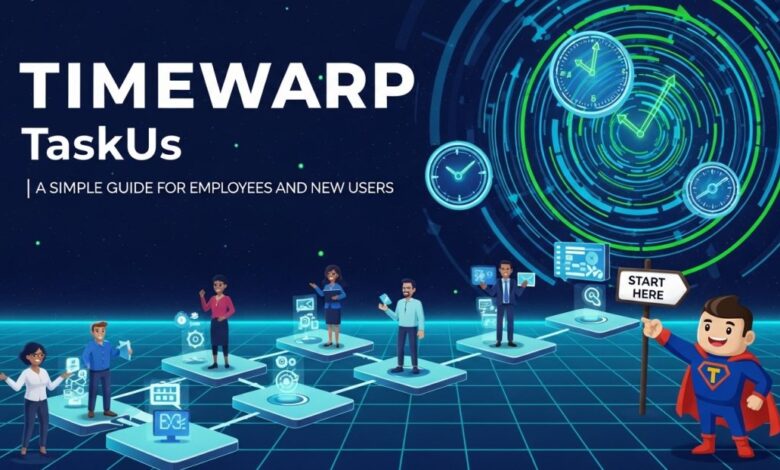
In today’s fast-paced digital workplace, efficiency isn’t just a goal—it’s a survival strategy. Large outsourcing companies like TaskUs rely heavily on smart workforce systems to keep operations smooth, employees aligned, and client expectations consistently met. One of the most talked-about internal tools in this space is often referred to as the Timewarp system within TaskUs’ operational ecosystem.


While the name may sound futuristic, its purpose is quite practical: helping teams manage time, attendance, scheduling, and performance in a structured, data-driven way. Let’s break it down in a human, simple, and real-world way.
What is Timewarp in TaskUs
Timewarp at TaskUs is generally understood as an internal workforce management and scheduling platform used to streamline employee shifts, track working hours, and optimize operational efficiency across teams.
In large BPO environments, where thousands of employees work across different shifts and clients, manual tracking simply doesn’t work. That’s where a centralized system like Timewarp becomes essential.
Instead of juggling spreadsheets or fragmented tools, managers and employees interact with a unified dashboard that keeps everything organized—from shift planning to attendance monitoring.
How Timewarp System Works in Real Operations
At its core, the system is designed to connect three major components:
- Employee scheduling
- Attendance tracking
- Workforce analytics
Managers assign shifts based on client demand, while employees can view their schedules, request changes, or mark attendance through the system. Meanwhile, performance data is collected to ensure staffing levels match workload demands.
A simple way to think about it: it acts like the “control room” of workforce operations.
Key Features of TaskUs Timewarp Platform
The platform is not just a digital calendar—it is a full workforce ecosystem. Here are some of its commonly understood capabilities:
- Real-time shift scheduling and adjustments
- Automated attendance logging
- Leave and absence tracking
- Workforce forecasting based on demand
- Performance visibility dashboards
- Role-based access for managers and employees
These features work together to reduce confusion and improve transparency in daily operations.
Traditional Scheduling vs Timewarp System
To understand its value, let’s compare it with older, traditional workforce management methods:
| Feature | Traditional System | Timewarp at TaskUs |
|---|---|---|
| Scheduling | Manual spreadsheets | Automated shift planning |
| Attendance | Paper or punch cards | Digital tracking system |
| Updates | Slow and delayed | Real-time updates |
| Error rate | High risk of mistakes | Reduced errors |
| Scalability | Limited | Designed for large teams |
This comparison shows why modern BPO companies prefer integrated systems like Timewarp over outdated methods.
How the System Functions in Practice
Imagine a customer support team handling a global client. One day, there’s an unexpected surge in customer queries due to a product update.
Without a system like Timewarp, managers would struggle to quickly reshuffle shifts or identify available agents.
But with a structured workforce tool, they can instantly adjust schedules, notify employees, and ensure coverage without chaos. Employees receive updated shifts in real time, and operations continue smoothly without service disruption.
This kind of flexibility is exactly what makes such systems valuable in high-pressure environments.
A Personal Experience Insight
From my experience observing how digital workforce tools transform operations, the biggest improvement is not just efficiency—it’s clarity. Employees no longer rely on verbal updates or scattered messages; everything is visible in one place, reducing confusion and missed shifts significantly.
That sense of structure alone can improve both productivity and workplace satisfaction.
Why Timewarp Matters for Large Organizations
In companies like TaskUs, where thousands of employees work across multiple clients and time zones, coordination becomes extremely complex. A centralized system helps in:
- Reducing scheduling conflicts
- Improving accountability
- Ensuring fair workload distribution
- Enhancing communication between teams
- Supporting data-driven decision-making
Ultimately, it allows managers to focus less on manual coordination and more on strategic operations.
Limitations and Challenges
Even though such systems are powerful, they are not perfect. Some common challenges include:
- Learning curve for new employees
- Dependency on system uptime
- Occasional technical glitches
- Limited flexibility for last-minute personal changes
However, most of these issues are gradually improved with updates and better integration.
The Hidden Value Most People Miss
Beyond scheduling and tracking, the real strength of systems like Timewarp lies in workforce intelligence. Over time, the platform collects data patterns—peak workload hours, employee availability trends, and productivity cycles.
This allows organizations to move from reactive scheduling to predictive workforce planning. Instead of reacting to problems, they start anticipating them.
That shift is what separates modern digital companies from traditional outsourcing setups.
Also Read: 1.5f8-p1uzt Texture Guide: Uses and Applications
Conclusion
Timewarp at TaskUs represents more than just a scheduling tool—it reflects how modern organizations manage human resources at scale. By combining automation, real-time tracking, and workforce analytics, it helps streamline operations in environments where timing and coordination are critical.
As workplaces continue evolving, systems like these will become even more essential in maintaining balance between employee efficiency and operational demand. Whether you view it as a backend system or a digital control tower, its role in modern BPO ecosystems is undeniably significant.
FAQs
1. What is Timewarp in TaskUs?
It is a workforce management system used to handle scheduling, attendance, and employee shift coordination.
2. Is Timewarp a public software?
No, it is generally considered an internal platform used within TaskUs operations.
3. Why do companies use systems like Timewarp?
They help automate scheduling, reduce errors, and improve workforce efficiency in large organizations.
4. Can employees access Timewarp?
Yes, employees typically use it to view schedules, attendance records, and shift updates.
5. Does Timewarp track productivity?
It may include performance and workforce analytics features to support operational planning.
6. Is it only used in BPO companies?
While commonly used in BPO environments like TaskUs, similar systems exist in many large enterprises.