Jayden Reed Fantasy Outlook: What His Role, Production and Injury Mean for Fantasy Managers

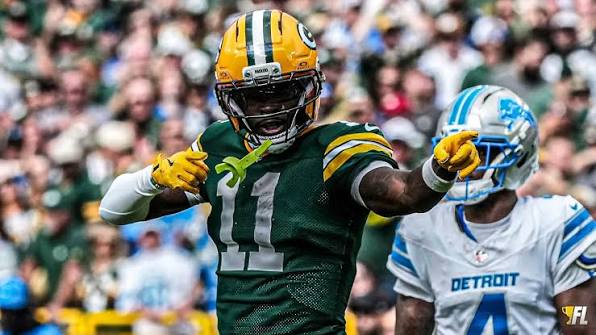
Jayden Reed fantasy discussions have become more complicated early in the 2026 NFL season. The Green Bay Packers wide receiver entered the year with an established track record of production, but a changing receiving corps, a reduced role in Week 1, and a serious-looking neck injury in Week 2 have created plenty of uncertainty for fantasy football managers.


Reed has already shown that he can be an explosive and versatile weapon when given opportunities. However, his fantasy value has always been closely connected to targets, playing time, red-zone involvement, and his ability to create big plays after the catch. Those factors deserve careful attention before making any decision about his value.
Jayden Reed’s NFL Track Record
Reed joined the Packers after being selected in the second round of the 2023 NFL Draft out of Michigan State. He immediately became an important part of Green Bay’s offense, finishing his rookie campaign with 64 receptions for 793 yards and eight receiving touchdowns in 16 games. He also contributed 119 rushing yards and two rushing touchdowns.
His second season was even more productive in terms of receiving yardage. Reed recorded 55 receptions for 857 yards and six touchdowns across 17 regular-season games in 2024. He averaged 15.6 yards per reception, demonstrating the big-play ability that has made him particularly interesting for fantasy managers.
The 2025 season, however, was disrupted by limited availability. Reed appeared in only seven regular-season games, producing 19 receptions for 207 yards and one touchdown. He also recorded three rushing attempts for 28 yards. Those numbers do not accurately represent his talent, but they do illustrate how much his fantasy production can change when his opportunities are limited.
Why Reed Remains Intriguing
The biggest reason to keep watching Reed is his history of efficiency and versatility. He is capable of operating from the slot, moving around the formation, taking manufactured touches and attacking defenses downfield.
His 2023 and 2024 seasons provide the strongest evidence of his fantasy ceiling. Across those two seasons, Reed accumulated 119 receptions for 1,650 yards and 14 receiving touchdowns. He also added 282 rushing yards and three rushing touchdowns.
That combination matters in fantasy football because receiving production is not the only path to points. A receiver who can contribute on designed runs has additional ways to produce, particularly when the offense creates opportunities close to the goal line.
Green Bay’s decision to retain Reed was also significant. The Packers extended him during the 2026 offseason, while the organization reshaped its receiver group around Reed, Christian Watson and younger players including Matthew Golden. The team had also moved on from Dontayvion Wicks and Romeo Doubs, creating a different distribution of offensive opportunities.
A Different Receiving Competition in 2026
One of the most important developments for Reed’s fantasy outlook is the competition around him.
Christian Watson remains a major downfield threat, while rookie Matthew Golden has entered the offense with significant expectations. The Packers also have other receivers capable of earning snaps, meaning Reed is not guaranteed the massive target volume that fantasy managers would ideally want from a weekly starter.
Green Bay’s offense demonstrated that variety in the opening game of 2026. Watson produced an 81-yard touchdown catch-and-run, while Golden also recorded a 42-yard reception. Tight end Tucker Kraft and Jonnu Smith contributed explosive plays as well. Packers coverage following Week 1 noted that Reed was among the players who did not record one of the team’s biggest gains.
That does not mean Reed has lost his importance. It simply means fantasy managers need to consider the entire offensive ecosystem rather than assuming he will automatically receive a dominant share of targets.
What Happened in Week 1?
Reed opened the 2026 regular season against Minnesota with three receptions for 20 yards on seven targets. He did not score a touchdown, and his fantasy production was modest.
The seven targets were encouraging from a volume perspective, but the efficiency was poor. FantasyPros reported that Reed played 55.2 percent of the offensive snaps and ran a route on 63 percent of Green Bay’s dropbacks, while his target share was 16.7 percent. He also recorded one red-zone target.
Those numbers suggest that Reed was involved but not yet operating as the clear centerpiece of the passing game.
For fantasy purposes, that distinction is important. A receiver can remain talented and valuable while simultaneously being difficult to trust as a weekly starter if his snap percentage and route involvement remain limited.
The Week 2 Injury Changes the Picture
The biggest development surrounding Jayden Reed fantasy value came in Week 2 against the New York Jets.
Reed suffered a neck injury on the opening series and was carted from the field. Packers head coach Matt LaFleur later said Reed had movement in all of his extremities and would remain overnight for observation. The team ruled him out for the remainder of the game.
At this stage, the most important point for fantasy managers is that the injury should not be treated as a routine short-term absence without further medical information. There is not enough publicly available information to establish a definite timetable for his return.
That uncertainty makes Reed particularly difficult to evaluate right now. Fantasy managers should follow official injury reports and team updates rather than assuming a specific recovery timeline.
How the Injury Affects His Fantasy Value
Before the injury, Reed was already viewed as a volatile fantasy option because of his role in a crowded Packers passing attack. The injury adds another layer of uncertainty.
If Reed returns quickly and resumes his normal workload, his previous production suggests he can still become a useful fantasy contributor. His career numbers demonstrate that he has the ability to turn relatively modest opportunities into meaningful production.
If his return is delayed or his snaps are restricted after returning, however, his weekly floor could remain low. Fantasy managers should pay particular attention to his practice participation, game status and whether Green Bay immediately restores his normal route involvement.
The situation also creates opportunities for other Packers receivers. Christian Watson and Matthew Golden could see additional work whenever Reed is unavailable, while the overall target distribution could change depending on the matchup and offensive game plan.
What Fantasy Managers Should Watch
The next meaningful indicator will be Reed’s health status. Practice participation is generally more informative than speculation because it provides evidence about whether a player is progressing toward game availability.
His role will be equally important once he returns. Fantasy managers should watch his snap percentage, routes, targets and red-zone opportunities rather than focusing only on the final receiving line.
His history shows why that matters. Reed had 64 receptions and eight receiving touchdowns as a rookie, followed by 55 receptions, 857 yards and six touchdowns in 2024. Those numbers establish a proven fantasy ceiling, but his 2026 usage suggests that reaching that ceiling depends heavily on his role within the Packers’ increasingly deep receiving group.
Should Reed Be Started When Healthy?
The answer depends heavily on league format, roster depth and his role after returning from the neck injury.
In deeper leagues, Reed’s previous production gives him considerable appeal because he has demonstrated the ability to produce explosive plays and touchdowns. In standard-sized leagues, managers may want to see evidence that he is receiving enough snaps and targets before automatically placing him into a starting lineup.
A healthy Reed with a consistent route share is a very different fantasy asset from a receiver playing limited snaps in a four-man rotation.
That distinction should remain central to every Jayden Reed fantasy decision during the 2026 season.
Fantasy Outlook Going Forward
Reed’s long-term fantasy value remains connected to three major factors: health, opportunity and efficiency.
His health is currently the biggest unknown following the Week 2 neck injury. His opportunity is also uncertain because Green Bay has several capable receiving weapons. His efficiency, meanwhile, is the part of his profile that has already been established through his first two seasons.
FantasyPros’ early-season rankings placed Reed around the WR4 range for Week 2 before the injury, reflecting the uncertainty surrounding his role and production. Those rankings are not guarantees, but they illustrate how his fantasy value was already being treated cautiously before the latest injury development.
The safest approach is therefore to avoid judging Reed solely by either his best season or his latest game. His career contains evidence of high-end production as well as stretches where availability and opportunity limited his output.
Frequently Asked Questions
Is Jayden Reed a good fantasy football player?
Reed has demonstrated strong fantasy potential through his first two productive seasons. He recorded 793 receiving yards and eight touchdowns as a rookie, then followed that with 857 yards and six touchdowns in 2024. His current value depends heavily on his health and role in Green Bay’s 2026 offense.
What happened to Jayden Reed in Week 2?
Reed suffered a neck injury early in Green Bay’s Week 2 game against the New York Jets. He was carted off the field and ruled out for the remainder of the game. The Packers later reported that he had movement in all his extremities and would remain overnight for observation.
How many fantasy points did Reed score in Week 1?
In Week 1 against Minnesota, Reed caught three passes for 20 yards on seven targets. FantasyPros listed his Week 1 fantasy total at two points in its scoring format.
Who could benefit if Reed misses time?
Christian Watson and Matthew Golden are among the Packers receivers positioned to receive more opportunities if Reed is unavailable. Green Bay’s receiving corps also includes Skyy Moore, Bo Melton and J. Michael Sturdivant.
Conclusion
The Jayden Reed fantasy outlook is currently defined by both opportunity and uncertainty. His career production shows that he has the talent to become a valuable fantasy receiver, particularly when he receives consistent targets and opportunities near the end zone.
However, the 2026 Packers offense has several receiving options, and Reed’s early-season role has been smaller than some fantasy managers may have expected. His Week 2 neck injury makes his immediate outlook even less certain.
For now, the most useful indicators are his medical updates, practice participation and eventual workload when he returns. Reed’s established NFL production gives him a meaningful fantasy ceiling, but his short-term value will depend on how quickly he returns and whether Green Bay restores him to a significant role in the passing game.