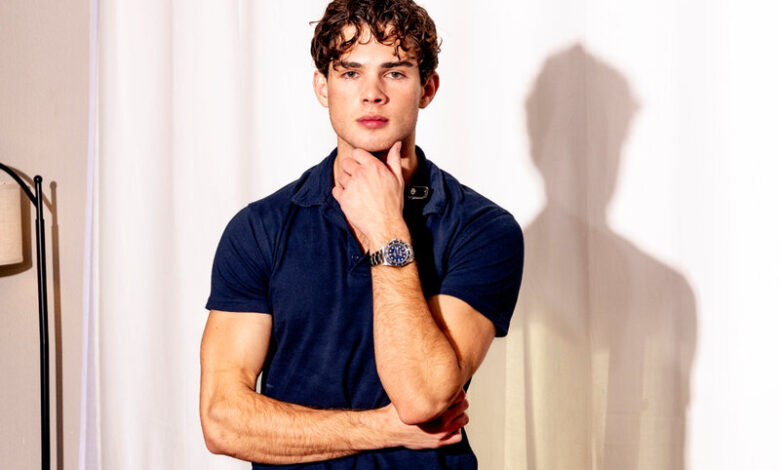
The phrase clavicular before and after has become a popular search topic as viewers compare older photos of Braden Peters with his current appearance. Better known online as Clavicular, Peters built his public identity around looksmaxxing, fitness, facial aesthetics, and extreme self-improvement discussions. His appearance has changed noticeably over a relatively short period, but the story behind that change is more complicated than a simple glow-up.
Clavicular became widely recognized through livestreaming platforms and short-form social media, where he discussed physical appearance and ways people could alter their looks. His transformation has attracted attention because older images show a much younger-looking version of Peters, while newer photographs show a more mature face, sharper styling, a different physique, and, more recently, the results of cosmetic surgery.
Who Is Clavicular?
Clavicular is the online name of Braden Eric Peters, an American internet personality and livestreamer who rose to prominence through social media and streaming content. His public image became closely associated with the online looksmaxxing community, a broad internet culture focused on improving physical appearance.
Peters became particularly well known because he did not simply discuss appearance from a distance. He presented his own face and body as examples of the transformation he wanted to achieve. His older and newer photographs therefore became part of the public discussion surrounding his online career.
His rapid rise also brought considerable controversy. His content has frequently centered on physical appearance, facial aesthetics, grooming, fitness, and different approaches to changing one’s look. Some of the methods discussed within extreme appearance-focused communities have also attracted criticism because they can involve significant physical risks.
Clavicular Before and After: What Changed?
When people search for clavicular before and after, they are generally comparing photographs from Peters’ teenage years with images from his late teens and early twenties.
The difference can appear dramatic because several factors are involved at the same time. His facial structure naturally matured as he grew older, while his hairstyle, grooming, body composition, photography, lighting, and personal styling also changed.
Older photographs circulated online show Peters with a softer facial appearance and noticeable skin issues. Later photographs show a more defined appearance, different hair and grooming choices, and a considerably more polished presentation.
However, comparing photographs from different ages does not prove that every visible change resulted from a cosmetic procedure. Natural development can produce substantial changes in facial proportions and overall appearance.
Natural Aging Matters
One of the most important details often overlooked in online before-and-after comparisons is age.
Peters was still very young during many of the photographs used in these comparisons. Facial proportions can change substantially during adolescence and early adulthood. Skin can improve, facial fat distribution can change, and the jaw and other facial features can appear more mature with age.
That makes it difficult to attribute every difference between an early photograph and a recent photograph to a particular treatment. A teenager and a young adult can naturally look quite different even without cosmetic intervention.
The Role of Looksmaxxing
Clavicular’s transformation is closely connected to looksmaxxing, the internet term used for efforts to improve physical attractiveness. The idea ranges from relatively ordinary habits such as grooming, exercise, skincare, sleep, and clothing to far more controversial practices.
Peters became particularly associated with the more extreme side of this culture. His online presence has included discussions about facial modification and other aggressive appearance-focused techniques. Some of these practices have been criticized by medical professionals because they can cause injury rather than reliably improving someone’s appearance.
This is important when examining clavicular before and after photographs. A dramatic visual difference does not automatically establish that every technique discussed online caused the transformation.
Did Clavicular Have Plastic Surgery?
This question became much easier to answer after Peters publicly underwent rhinoplasty.
In June 2026, he publicly documented his nose surgery, which was performed by cosmetic surgeon Michael Salzhauer, commonly known as Dr. Miami. The procedure attracted considerable attention because it was shown to his online audience.
Afterward, photographs of Peters’ new appearance spread widely across social media. The change in his nose became one of the clearest documented examples of a cosmetic alteration in his transformation.
The response was mixed, with some viewers praising the new appearance and others preferring his previous look. This reaction also highlighted how subjective facial aesthetics can be.
The Nose Job Changed the Comparison
The rhinoplasty gives the clavicular before and after discussion a more concrete point of comparison.
Before the operation, Peters already had a distinctive facial appearance that had become strongly associated with his online identity. After the operation, his nose appeared different, changing the balance of his facial features.
However, judgments about whether the change is attractive are subjective. Facial surgery can alter proportions without making someone’s appearance objectively better or worse. What looks appealing to one person may not have the same effect on another.
What About His Jawline?
Peters’ jawline is another major focus of before-and-after discussions.
Older photographs show a softer appearance, while newer images often emphasize a sharper and more angular facial structure. His changes have been discussed alongside the looksmaxxing culture’s fixation on jaw definition and facial proportions.
Still, it would be inaccurate to claim that one particular method created his current jawline without reliable medical documentation. Age, body-fat levels, facial hair, camera angles, lighting, hairstyle, and image editing can all influence how defined someone’s face appears.
Various claims about additional cosmetic procedures have also circulated online. However, those claims should be separated from confirmed information. Photographs alone cannot reliably establish whether a person has undergone a specific medical or cosmetic procedure.
Why the Transformation Gets So Much Attention
The interest in clavicular before and after images is partly about appearance, but it is also about the story attached to those photographs.
Peters turned his physical appearance into part of his online brand. Instead of simply changing his appearance privately, he documented and discussed aspects of his transformation publicly. That made viewers interested in tracking the process.
His audience also grew rapidly, meaning photographs that might once have remained personal became widely circulated online. His appearance consequently became part of a much larger conversation about male beauty standards, social media influence, cosmetic procedures, and the pressure to look a certain way.
The fascination also reflects a broader trend in which influencers present highly controlled versions of themselves. Lighting, posing, camera lenses, filters, styling, and professional photography can all make comparisons appear more dramatic than they might in ordinary life.
Is Clavicular’s Transformation Completely Natural?
The most accurate answer is no, not entirely, because his rhinoplasty is publicly documented. At the same time, it would also be inaccurate to suggest that every aspect of his appearance comes from surgery.
His transformation appears to involve a combination of natural maturation, grooming, styling, changes in physique, and documented cosmetic intervention. The exact contribution of each factor cannot always be determined from photographs alone.
This distinction is particularly important when discussing young people and appearance. A before-and-after photograph can show that two images look different, but it cannot by itself explain exactly why they look different.
Clavicular Before and After: What the Photos Really Show
Ultimately, clavicular before and after comparisons provide a visual record of how dramatically a person’s appearance can change during the transition from adolescence to early adulthood.
The older images show a younger Braden Peters, while later photographs show a more mature and carefully styled version of the influencer. His documented rhinoplasty provides one confirmed cosmetic change, while other claims about procedures should be separated from speculation.
His story also demonstrates why social-media transformations need context. A striking photograph can make change look instant, even when that change develops over several years through aging, lifestyle, grooming, styling, and cosmetic procedures.
Frequently Asked Questions
Who Is Clavicular?
Clavicular is the online name of Braden Eric Peters, an American livestreamer and internet personality known for content surrounding looksmaxxing and physical appearance.
Did Clavicular Have a Nose Job?
Yes. Peters underwent rhinoplasty in June 2026, with the procedure performed by cosmetic surgeon Michael Salzhauer, also known as Dr. Miami. The surgery was publicly documented through his online content.
Why Does Clavicular Look Different in Older Photos?
Several factors may explain the difference, including natural aging, changes in physique, grooming, hairstyle, photography, and cosmetic intervention. Not every visible change can be attributed to surgery.
Are All of Clavicular’s Rumored Procedures Confirmed?
No. While his rhinoplasty is documented, online claims about additional procedures have not all been independently verified. Before-and-after photographs alone are not enough to establish what medical procedures someone has undergone.
What Is Looksmaxxing?
Looksmaxxing is an online term for deliberately improving physical appearance. It can include ordinary practices such as grooming and exercise, but some online communities have also promoted extreme methods that may carry health risks.
Conclusion
The story behind clavicular before and after is more than a simple internet glow-up. Braden Peters’ appearance has changed through natural maturation, grooming, styling, physical development, and at least one clearly documented cosmetic procedure: rhinoplasty.
His transformation has attracted unusual attention because appearance is not simply part of his personal life; it is central to his online identity. The safest way to understand the comparison is to separate documented changes from speculation and remember that photographs cannot reveal every detail of a person’s appearance journey.
In the end, the images show a young influencer who has undergone a significant visual evolution, while the exact reasons behind every individual change remain more complicated than a single before-and-after photograph suggests.